AIT Helps Improve the
Lives and Learning of Those with Autism, ADHD, Hyperacute Hearing, Speech Delays
& Tinnitus...in 10 Days. The
AIT Institute is the #1 Provider off
AIT At Home Services
globally and is the largest AIT resource website in the world.
AIT
is the #1 clinically studied auditory based
educational intervention! All sessions are
conveniently completed at home under the supervision of an
AIT
Practitioner. AIT services are available in the
USA, Canada and other English speaking countries.
AIT
requires 10 hours of sound therapy, with 20 sessions of 30 minutes
each, done 2 times daily over 10 consecutive days. This
listening therapy helps to
correct
hyperacute
hearing,
tinnitusand other auditory
challenges.
AIT
has been used successfully with children and adults with many
different
diagnoses for
over 60 years.
Facts for Parents About Auditory Integration Training
We have
facilitated AIT therapy for hundreds of families since 2004!
Supervised At Home AIT Sessions AIT Sessions
consist of 20 sessions (10 hours)
of
30
minutes each, done twice a day, over
10 or 12
consecutive days.
This affordable service is available in throughout the USA, Canada,
Australia, New Zealand, the United Kingdom, Europe
and to English speaking clients in certain other countries.
Affordable
AIT At
Home uses our equipment for 14 days and is completed in the home
environment. Family discounts are also offered.
Note: AIT is now done in the
home environment with no need to travel to an office for services.
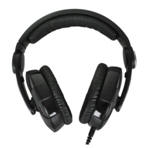
The Berard AIT protocol requires that a Participant listen to modulated music on device
developed for Berard AIT, using high quality headphones for a total of ten
(10) hours, over 10 (or 12) consecutive days under the supervision of
a professionally trained AIT Practitioner.
AIT is now done in the home environrnent, with no need to travel to an office for services!
Parents or adults considering AIT are encouraged to watch this 11 minute
educational video.
This video explains the basics
of
AIT,
why AIT works and the many types
benefits AIT provides as a sound
therapy. In this video, parents, teachers and other
professionals share success
stories and
testimonials about the impact of AIT
on the lives of children.
This video about Berard AIT was produced by and features
Laurie Ross-Brennan, AIT Practitioner providing In Office services
only in
Albuquerque, NM.
Practitioner Supervised At Home AIT Services: Is available using the newer
computer based AIT system in the USA, Canada, Australia, the United
Kingdom, Europe and certain other English speaking countries.
Contact us
for affordable prices!
Ifa AIT Listening
Testis recommended, it may be done for free online. This
is only for candidates who have completed the online
AIT Checklist.
The online
AIT Listening
Test is provided to candidates for AIT to
check hearing thresholds and graph peaks and valleys in hearing at ten
(10) frequencies, for both ears.
The recommended
age for listening tests or audiograms is age 7 or more.
If local testing
with an audiologist is done, it must be done using our specific written
instructions on how to perform the Berard AIT
audio tests.
AIT is not a medical intervention and is
not therefore not intended to be covered by medical insurance.
AIT Practitioners who bill insurance or encourage Participants to
submit bills to insurance for Berard AIT are violating the
principals of Berard AIT, their certification instructions as well as professional
ethics.
Dr. Berard developed a scientific method of retraining theear's acoustical reflex
muscle
- known also as the stapedius muscle so that the
Participant will be able listen and to process sounds more normally
without distortions and delays.
AIT is also documented to improve the flow of blood to
the brain.
AIT is based on
Dr. Berard's theory that the use of his specifications to
electronically modulate and filter selectedmusic retrains the ear and
auditory system to work properly.
Dr. Berard discovered that
hypersensitivity, distortions and delays in the auditory
signals
contribute to inefficient learning.
AIT retrains a disorganized auditory
system. The end result is that there is a more
efficient processing of auditory information as a result of
the 10 day Berard AIT program.
Once
the cause of the hearing and auditory processing problem is
corrected, all therapy and other
educational interventions can
often become more effective. Changes can then occur
that enable the Participant to achieve at a higher
level.
AIT works on the auditory
nervous system. Since that is intertwined with the language
neurology in many cases,
limited verbal
children start talking more after AIT. Many who have
stopped progressing in language therapy start improving
again.
AIT stimulates the white
matter nerves that help us connect with and retrieve words
that are already in there, as well as learning new words
better because they come in clearer.
The human
body is constantly impacted by internal and external sound
stimulation and vibrational energy.
Each organ in
the human body responds to a different sound frequency.
When the listening process is not working properly, it
can interfere with our entire system, our overall health and
our ability to function in harmony.
The way our
bodies respond to and process sound and vibrational energy
affects us deeply.
Sound
and frequency impacts our overall health, mood, energy
level, alertness, attention span, focus, concentration,
information processing and how we express ourselves, both
verbally and in writing.
AIT is a
non-medical and is designed to be comfortable, pain free, non-invasive and pleasant experience.
AIT is Non-Medical:
AIT devices are not considered to be medical
devices and it is an educational intervention. AIT devices are not under the jurisdiction of the FDA.
Age Minimum:
TheBerard
AIT protocol requires that the minimum age for participation is about
three (3) years old.
The
85 dBA level for a total of one-hour per day is
well below the OSHA guidelines for non-hazardous noise levels.
The
OSHA Noise Standard permits exposure to an average
noise exposure of 85 dBA for eight continuous hours.
There
is a safety that keeps its "average maximum output" from exceeding
this level of 85 dB. Those working with children age 3 and 4 and
those with autism generally keep
the volume at 65 dB.
For a child 4 years and older through adults,
the best effect from AIT will be achieved
at a setting that is comfortably loud for that individual.
The
volume level chosen is set is "comfortably loud"
for each listener.
Observers need to watch the
Participant for signs of discomfort if a Participant is unable to to
verbalize this.
As the sessions progress, the sound level will attempt to increase
in volume, while always maintaining a volume that
is "comfortably loud" for the Participant.
Note:
Additional filters for AIT are NOT required on clients with autism, those
age 6 or under or those who can not
comply with audio testing. Even those doing audio tests
may not require possible filters. AIT is equally effective
without additional filters. One of the largest
AIT clinical studies ever
done for AIT research was conducted in this manner.
Audio testing must be done
by a qualified audiologist or qualified professional trained to administer such test who is able to
provide the specific information required
by the Berard
Testing Protocol
and who also has experience interpreting such tests.
For
audio testing to be valid, a Participant must
be able and willing to accurately respond to a series of
tones through special headphones to determine the
Participant's threshold for each tone.
For
audio tests results to be used for AIT, all
10 frequencies from 20 db to a
-20 db (relative to
the individual)
for each ear must be tested.
Read more.
In most cases,
children under the age of 65 and
those with special needs
will have difficulty
cooperating with the tests due to the nature of the
audio testingrequired to use filters.
Those for whom a valid test can NOT be obtained for AIT,
the AIT is without additional filters
and has been
proven in studies to still be very effective and
very helpful
as an intervention.
If a Participant gets an fluid in the ear or an ear infection during
AIT sessions
may need to discontinue.
Ear Health Check:
We suggest that ears are checked before AIT if is there is a suspected or recent
ear infection before beginning AIT
listening sessions.
Ear Infections:
AIT must not be conducted if
the Participant has an active ear infection or a perforated
eardrum.
After the ear infection has cleared up, AIT can begin again. It is
usually safest to wait 2 weeks to one month after an ear
infection before re-starting
AIT.
Temporary Ear Tubes:
AIT must not be conducted
if an ear tube is loose.
Permanent Ear Tubes: If permanent ear tubes are in
securely then AIT is allowed.
Relax and Listen:
The child should be encouraged to be in a calm
environment and just listen during Berard AIT and relax in a bean
bag or other comfortable chair.
Food:
No
eatingis allowed during AIT sessions.
Permitted: Coloring or drawing is
permitted or played with soft toys, fidgets, sensory toys,
etc.
Physical Contact: A parent may give a
back, arm, hand massage if this comforts a young child
doing sessions.
Reading:
No reading or homework is allowed during AIT sessions.
Sleeping:
the participant should remain awake during all of the
AIT sessions and be
actively listening for the maximum benefit
of Berard AIT. Some children become very drowsy during
Berard AIT session and afterwards.
AVOID:
All activities that require planned fine motor skills. These activities would include such things as
building in a specific pattern puzzles, building Lego's or blocks. Coloring or drawing is
permitted or played with soft toys, fidgets, sensory toys,
etc.
AVOID: TV, hand held gaming devices, internet, smart phones,
computer work, etc.
AVOID: Additional lifestyle stress for the participant
during ATI. AIT should be conducted
with the participant under as little stress as possible. It is recommended
that
parents
discontinue or keep all outside activities and other therapies to a minimum during the 10 days of
Berard AIT.
Any subsequent set of 20 AIT sessions should
not occur in
less than six (6) to nine (9) months from
the date of the completion of the previous AIT session.
Autistic
Children Repeating AIT:
repeating AIT for any subsequent set
of 20 Berard AIT sessions should
not occur in
less than one (1) year from the date of the completion
of the previous Berard AIT session.